


Blog




0102030405
What is the difference between alpha lipoic acid and berberine?
2026-04-22
In the field of functional Health Ingredients,alpha-lipoic acidand berberine are two star ingredients that have garnered significant attention in recent years, demonstrating unique value in areas such as metabolic health, blood sugar regulation, and Antioxidant protection.
However, many people are unclear about the differences between these two ingredients, whether they can be used together, and how to take them correctly. This article will address these core questions, providing a comprehensive understanding of the mysteries of alpha-lipoic acid and berberine.
However, many people are unclear about the differences between these two ingredients, whether they can be used together, and how to take them correctly. This article will address these core questions, providing a comprehensive understanding of the mysteries of alpha-lipoic acid and berberine.
What are berberine and alpha-lipoic acid powder?
Alpha-lipoic acid powder (ALA) is a naturally occurring organosulfur compound found in the mitochondria of human cells. It participates in the energy metabolism of proteins, carbohydrates, and fats. As a potent antioxidant, it can directly scavenge free radicals and regenerate other antioxidants such as vitamin C, vitamin E, and glutathione.
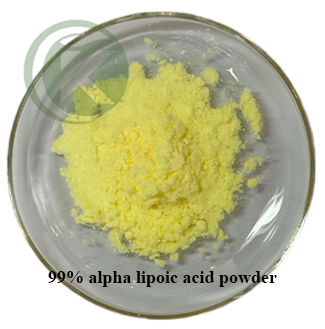
ALA was first isolated from bovine liver in 1951 and is currently mainly produced through chemical synthesis or bio-fermentation. It is a pale yellow crystalline powder at room temperature. Its unique characteristic is that it is both water-soluble and fat-soluble, allowing it to cross the blood-brain barrier and exert antioxidant protective effects throughout the body.
ALA was first isolated from bovine liver in 1951 and is currently mainly produced through chemical synthesis or bio-fermentation. It is a pale yellow crystalline powder at room temperature. Its unique characteristic is that it is both water-soluble and fat-soluble, allowing it to cross the blood-brain barrier and exert antioxidant protective effects throughout the body.
Berberine, on the other hand, is an isoquinoline alkaloid with the molecular formula C₂₀H₁₈NO₄⁺. It is widely found in plants such as Coptis chinensis, Phellodendron amurense, and Berberis genus. In traditional Chinese medicine, berberine is classified as a "heat-clearing and dampness-drying" herb, used to treat diarrhea, infections, and "xiaoke" syndrome.
Its use dates back approximately three thousand years. Berberine hydrochloride, commonly known as berberine hydrochloride, is a yellow crystalline powder and is now widely used in the pharmaceutical and health product fields. Unlike alpha-lipoic acid, berberine has a lower oral bioavailability (approximately 0.37%), and is mainly distributed in the liver, kidneys, and muscle tissue. However, this does not prevent it from becoming a star ingredient in the field of metabolic health.
What are the benefits of berberine and alpha-lipoic acid powder?
Alpha-lipoic acid's most prominent effects are its antioxidant and neuroprotective properties. As a potent antioxidant, it can directly scavenge reactive oxygen species such as hydroxyl radicals and peroxynitrites, and also enhance the cell's own defense system by activating the Nrf2/ARE pathway.
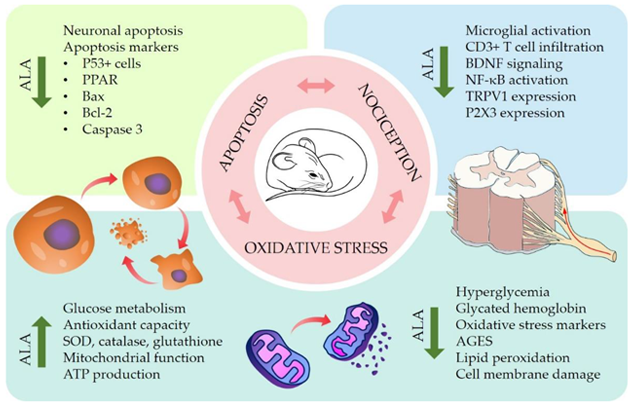
Clinical studies have confirmed that daily oral administration of 600 mg alpha-lipoic acid can significantly improve HbA1c and lipid profiles in patients with type 2 diabetes. Furthermore, alpha-lipoic acid can enhance the translocation of the glucose transporter GLUT4 to the cell membrane and improve insulin sensitivity by activating the AMPK pathway, thereby promoting glucose uptake.
Alpha-lipoic acid is also used as adjunctive therapy for liver disease, reducing ALT/AST levels and improving liver function in patients with alcoholic liver disease and non-alcoholic fatty liver disease.
Alpha-lipoic acid is also used as adjunctive therapy for liver disease, reducing ALT/AST levels and improving liver function in patients with alcoholic liver disease and non-alcoholic fatty liver disease.
Berberine and Alpha Lipoic Acid for Weight Loss
Both alpha-lipoic acid and berberine have shown potential in weight management, but their mechanisms of action differ. Alpha-lipoic acid helps improve fat oxidation efficiency and energy expenditure by supporting mitochondrial energy production and carbohydrate metabolism, thus aiding in weight management. It also increases adiponectin and decreases leptin levels; both hormones are involved in regulating appetite and fat storage.
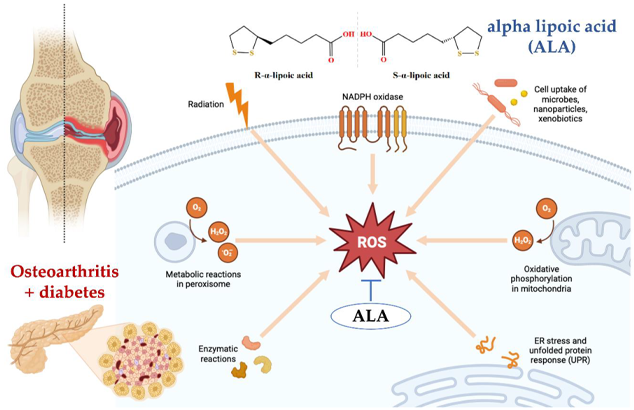
Berberine, on the other hand, helps with weight loss by improving metabolism and reducing fat accumulation. Its mechanism of activating the AMPK pathway promotes fatty acid oxidation and inhibits fat synthesis, while also enhancing GLP-1 levels—a hormone involved in satiety and blood sugar balance.
A 2025 clinical study is evaluating the effects of combined berberine and alpha-lipoic acid on appetite suppression, body composition, and weight control; the supplement combination in this study is taken 30 minutes before meals. Furthermore, a recent meta-analysis found that berberine can also lower triglycerides, fasting blood glucose, and help reduce waist circumference. The synergistic effect of these two ingredients in weight loss is why they are frequently found in metabolic health combination products.
How to Use Alpha-Lipoic Acid and Berberine Powder?
Regarding the use of alpha-lipoic acid and berberine, correct dosage and administration are crucial. The daily maintenance dose of alpha-lipoic acid is typically 50 to 200 mg orally, while therapeutic doses can reach 300 to 600 mg daily.
The most commonly used dose in clinical studies is 600 mg daily, divided into several doses. One 16-week trial showed that twice-daily administration of 600 mg alpha-lipoic acid reduced the HOMA-IR score in overweight adults by 25%.
It is important to note that food reduces the absorption of alpha-lipoic acid; therefore, it is recommended to take it on an empty stomach between meals or before meals to maximize absorption. Common dosage forms of alpha-lipoic acid include oral tablets, capsules, and injections, with injections requiring a prescription.
It is important to note that food reduces the absorption of alpha-lipoic acid; therefore, it is recommended to take it on an empty stomach between meals or before meals to maximize absorption. Common dosage forms of alpha-lipoic acid include oral tablets, capsules, and injections, with injections requiring a prescription.
Alpha-lipoic acid and berberine supplements
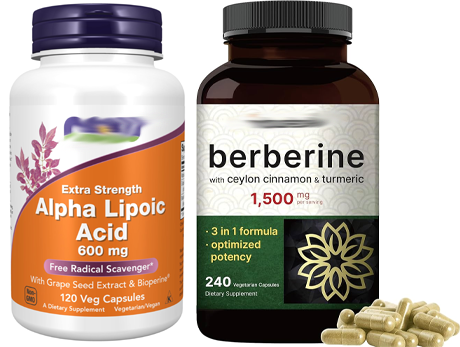
Alpha-lipoic acid and berberine supplements are becoming increasingly popular in the market. These products combine the two ingredients in a scientifically formulated ratio to synergistically regulate metabolism and provide antioxidant protection. Many commercially available products contain both berberine and alpha-lipoic acid, often with added ingredients such as vitamin C or grape seed extract to enhance overall effectiveness.
These supplements are particularly suitable for individuals with insulin resistance, high cholesterol, or a predisposition to metabolic syndrome. When choosing a supplement, it is important to ensure that the levels of each ingredient meet the recommended dosage ranges from clinical studies and that the product is sourced reliably and manufactured according to standardized procedures.
Can I take berberine and alpha-lipoic acid together?
The answer is yes. Alpha-lipoic acid and berberine can be taken together, and numerous studies and market practices have shown that their combined use has a synergistic effect. This synergistic mechanism allows the combination to achieve a "1+1>2" effect in metabolic health management, jointly supporting healthy blood sugar levels and cardiovascular function.
At the clinical application level, a 2025 clinical trial is evaluating the effects of a combination nutritional supplement containing berberine (200 mg per dose) and alpha-lipoic acid (150 mg per dose) on appetite suppression, weight control, and body composition improvement in high-risk individuals for metabolic syndrome. Furthermore, well-known brands such as Douglas Laboratories have launched combination products containing berberine and alpha-lipoic acid to support healthy blood sugar and cardiovascular function.
Where to buy alpha-lipoic acid powder?
For businesses needing to purchase high-quality alpha-lipoic acid powder, choosing a fully qualified and technically strong supplier is crucial. Kintainutri® boasts modern production lines and a Class 100,000 cleanroom that meet GMP standards.
In the production of alpha-lipoic acid powder, we rely on our strong technical capabilities and comprehensive quality testing system to ensure high purity and batch consistency, providing a stable and reliable raw material supply to domestic and international clients in the health supplement, pharmaceutical, and food industries.